
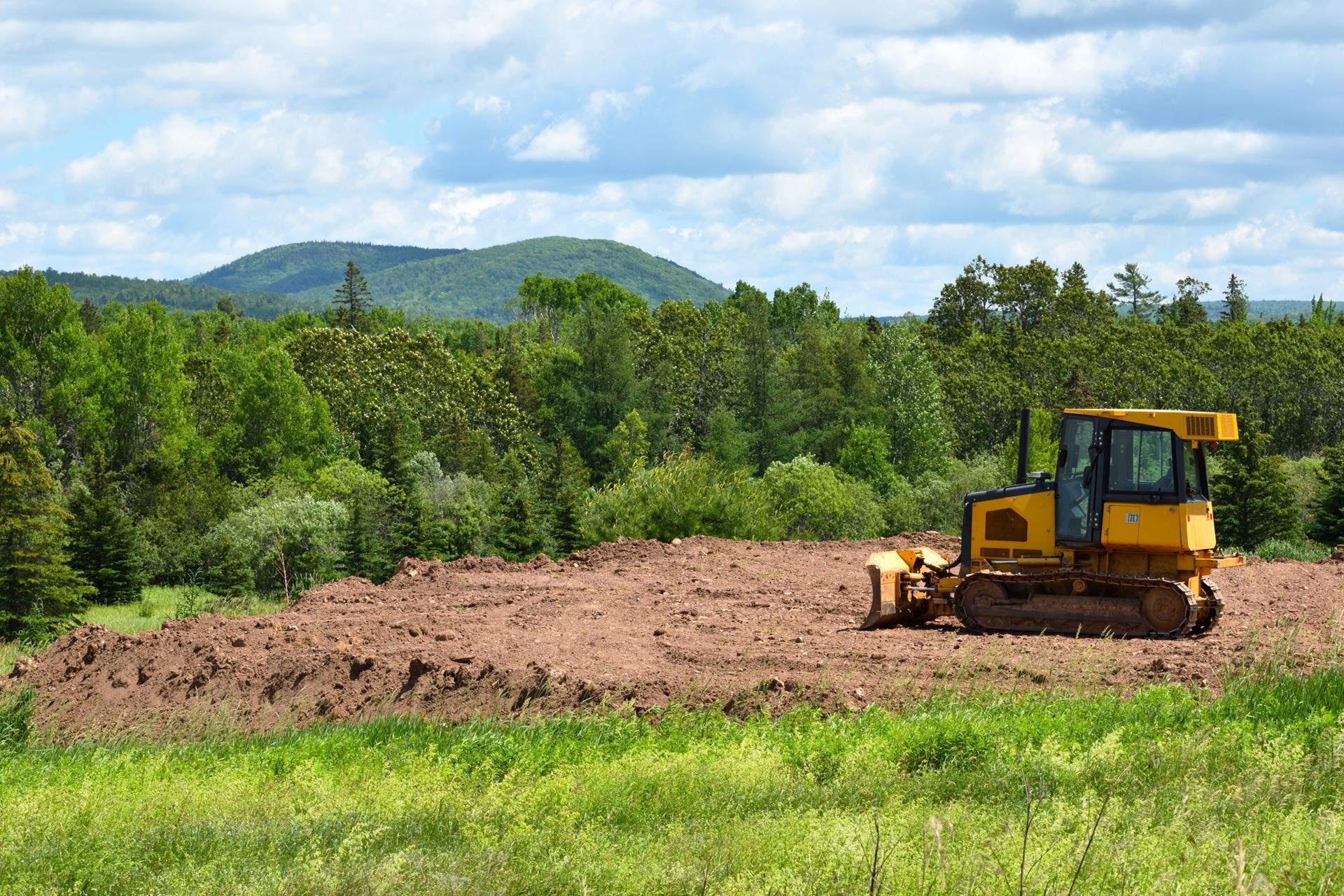
Slopes That Control Water Movement
Land Grading in Pleasant Hill, Missouri for construction sites, eroded yards, and properties with improper water flow away from buildings
Missouri's clay soils expand when wet and crack during dry spells, which means land grading must account for how water moves across surfaces and how soil stability changes with moisture content. When slopes direct runoff toward foundations instead of away, or when flat areas trap water in depressions, the resulting saturation causes settling, erosion, and structural moisture problems that worsen with each rain cycle. Griggs And Badger Construction provides land grading in Pleasant Hill, Missouri for residential properties, commercial sites, and new construction that requires precise slope control for drainage and erosion prevention.
Grading involves cutting high areas and filling low spots to create slopes that move water away from structures at a consistent rate—typically two percent grade minimum to prevent ponding while avoiding erosion from excessive slope. Equipment operators use laser levels or GPS-guided systems to match engineered elevation plans, removing the guesswork that leads to surface irregularities and drainage failures. Proper grading also prepares sites for concrete pours, landscaping installation, and paving by providing stable, compacted surfaces that won't settle unevenly under load.
Request grading services for your property to address drainage concerns before they affect structures or landscaping.
Excavation and Site Preparation
Ground prep, drainage solutions, and land grading handled by one experienced crew.
Concrete Work
Structural concrete services integrated into the full scope of your build.
Kitchen and Bathroom Remodeling
Residential remodels managed start to finish without coordinating separate trades.
Roofing and Utility Work
Roofing and sewer work included in turn-key project delivery for residential and light commercial builds.
What Proper Land Grading Requires
Accurate grading depends on understanding finish elevations before earthmoving begins, so operators know how much material to cut or fill in each area. The process includes stripping and stockpiling topsoil for later replacement, shaping subgrade surfaces to match drainage plans, and compacting fill material in lifts to prevent future settling. Compaction quality matters as much as final slope—loose fill settles unevenly and creates the depressions and humps that reappear years after grading.
You'll observe water flowing consistently away from buildings after grading, with no pooling in yard areas or along foundation perimeters even during heavy rain. Driveways and walkways installed on properly graded bases remain level rather than developing cracks and tilts from subsurface settling. Landscaping survives better because roots aren't alternating between saturated and drought-stressed soil as they would in areas with poor drainage.
Grading often works in coordination with excavation for new builds and drainage system installation for existing properties, creating comprehensive site solutions rather than isolated fixes. The service applies to driveway approaches that need proper slope for water runoff, commercial parking areas requiring ADA-compliant grades, and residential yards where erosion or settling has altered original site drainage patterns.
What Property Owners Usually Ask
Grading projects raise questions about timing, material handling, and how the work integrates with other site improvements.
What slope percentage do you need for effective drainage?
Residential sites typically require two to three percent grade away from foundations—enough to move water without causing erosion—while flatter slopes allow ponding and steeper grades wash away topsoil.
How does grading differ from basic leveling?
Leveling creates flat surfaces, while grading establishes specific slopes and elevations that control water flow and prepare sites for construction, often involving both cutting and filling to match engineered plans.
Why can't you just add soil to low spots without grading the entire area?
Spot-filling creates transitions where new material meets existing ground, and without proper compaction and slope continuity, those patches settle and recreate depressions within months.
When should grading happen during a construction or renovation project?
After utility lines are installed but before concrete, paving, or final landscaping, allowing grades to be set correctly without disturbing finished surfaces or requiring later rework.
How do Pleasant Hill's soil conditions affect grading techniques?
Local clay content means fill material must be compacted at specific moisture levels to achieve stability—too wet and it becomes plastic, too dry and it won't compact properly, which requires monitoring conditions during the work.
Griggs And Badger Construction uses professional grading equipment and elevation controls to meet your site's drainage and construction requirements, whether you're preparing for a new build or correcting water flow problems on an established property. Schedule a site review to determine grading scope and coordinate timing with your project phases.