
Surfaces Built to Support Heavy Use
Concrete Work in Pleasant Hill, Missouri for driveways, slabs, and flatwork that withstand repeated vehicle traffic and structural loads
Griggs And Badger Construction completes concrete projects in Pleasant Hill, Missouri that include driveways, slabs, and structural flatwork for both residential and commercial properties. The service applies to new construction, property additions, and upgrades where durable surfaces are required to handle weight, weather exposure, and daily use. Because the same crew manages excavation and site preparation, the base conditions are controlled before any concrete is poured, which directly affects how well the surface performs over time.
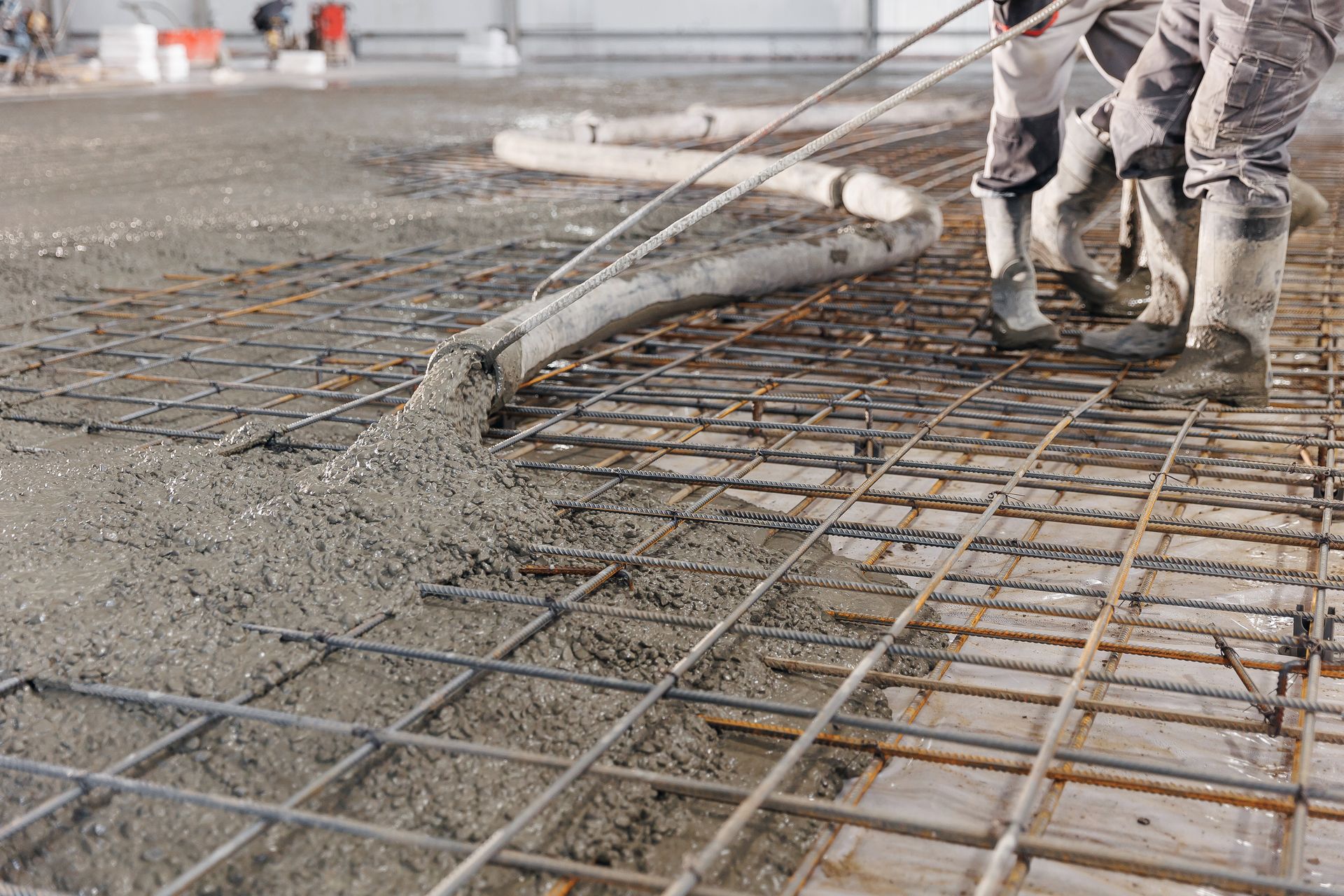
Proper concrete work starts with correct subgrade preparation and elevation control, then moves to forming, reinforcement placement, pouring, and finishing. In Missouri, freeze-thaw cycles stress concrete surfaces throughout winter, so the base must be compacted uniformly and drainage must move water away from the slab edges. Without adequate prep, settling and cracking show up within the first few seasons, particularly under driveways where vehicle loads concentrate pressure at the approach and along tire paths.
Request a concrete project quote to review site conditions and surface requirements for your property.
Excavation and Site Preparation
Ground prep, drainage solutions, and land grading handled by one experienced crew.
Concrete Work
Structural concrete services integrated into the full scope of your build.
Kitchen and Bathroom Remodeling
Residential remodels managed start to finish without coordinating separate trades.
Roofing and Utility Work
Roofing and sewer work included in turn-key project delivery for residential and light commercial builds.
What Proper Concrete Installation Requires
The process begins with excavation to stable soil depth, followed by compacted aggregate base installation that allows water to drain rather than pool beneath the slab. Forms are set to final grade, reinforcement is positioned to control cracking, and the concrete is poured in sections that allow for controlled finishing. The mix itself must match the intended load and exposure conditions, which varies between a residential walkway and a commercial drive lane.
After the concrete cures, you'll notice a surface that sheds water toward drainage points rather than holding puddles, resists surface spalling during freeze cycles, and maintains a level plane without dips or high spots that cause vehicle scraping or water pooling. Driveways remain smooth under tire paths, and slabs supporting structures stay level without corner lifting or center sagging. The surface finish also determines slip resistance and appearance, from broom-finished texture for traction to troweled smoothness for indoor slabs.
Because excavation and concrete work are handled by the same team, transitions between site prep and pouring happen without scheduling gaps or miscommunication about subgrade conditions. This also means adjustments to base depth or drainage routing can be made immediately if soil conditions differ from initial assessments. The turn-key approach removes the need to coordinate separate excavation and concrete contractors, which often leads to disputes over who is responsible when base settlement causes slab failure.
Questions Before Starting Your Project
Homeowners and property managers in Pleasant Hill typically ask about timing, materials, and what the installation process involves before scheduling concrete work.
What thickness is required for a residential driveway?
Driveways handling standard passenger vehicles typically require four inches of concrete over a compacted aggregate base, but areas with heavier truck traffic or unstable subgrade may need six inches and additional reinforcement to prevent cracking under load.
How does Missouri weather affect concrete curing?
Cold temperatures slow the curing process and increase the risk of surface damage if concrete freezes before it reaches sufficient strength, so scheduling during moderate weather windows or using cold-weather admixtures becomes necessary for late fall and early spring pours.
What causes concrete driveways to crack along the edges?
Edge cracking usually results from inadequate base support where the driveway meets soil or lawn areas, allowing the outer sections to settle independently from the center, especially after rain softens the surrounding ground.
hy does the base preparation matter as much as the concrete itself?
The base controls drainage and provides uniform support; even high-strength concrete will crack and settle if the underlying material shifts, compresses unevenly, or allows water to undermine the slab from below.
When should control joints be saw-cut into new concrete?
Control joints are typically cut within 12 to 24 hours after finishing, once the concrete is hard enough to prevent raveling but before internal stresses cause random cracking, and they're placed to control where cracks form rather than prevent them entirely.
Griggs And Badger Construction handles site evaluation and material planning as part of every concrete project, so the base, mix design, and finishing approach match your property's specific conditions. Schedule a site consultation to review drainage, load requirements, and project scope.